In the packaging industry, especially when it comes to food outer packaging, ensuring the integrity and durability of packaging materials is crucial. Packaging needs to withstand the stresses and strains of distribution, storage, and handling to protect the contents inside. A key test to determine the strength of packaging materials is the packaging compression test, which evaluates a package’s ability to endure compressive forces. This test is commonly conducted following the ISO 12048 standard.
In this article, we will explore the importance of the packaging compression test, the process involved, and how it contributes to ensuring the quality and safety of food outer packaging.
What is the Packaging Compression Test?
The packaging compression test is designed to assess the resistance of food outer packaging to compressive forces. It simulates the conditions that packages face during handling and transportation, including stacking and compression under load. The test can help determine the ability of the packaging to protect its contents from deformation, collapse, or damage.
The test is particularly important for food outer packaging, as it must not only protect the food but also maintain its shape and integrity under pressure. For example, a box of canned goods or a carton of packaged food must be able to withstand stacking in a warehouse or during transit without the contents getting damaged.
The Significance of the Compression Test in Food Packaging
The compression strength of packaging materials is a critical factor in determining the durability and reliability of the packaging during its life cycle. The packaging compression test provides valuable information about the structural integrity of food outer packaging, ensuring that it can withstand the forces it will face during storage, transport, and handling.
Here are some key reasons why the compression test is essential for food packaging:
1. Ensures Package Durability
Food packaging must maintain its shape and strength to avoid collapse or deformation. The compression test helps manufacturers determine whether their packaging materials will be able to protect the food products inside without failing under normal transport conditions. By evaluating how packaging materials react to compressive forces, manufacturers can choose the most durable materials for their needs.
2. Quality Control for Packaging Materials
The compression test is essential in quality control processes. It ensures that each batch of packaging meets the required standards for compressive strength and durability. If packaging fails the test, it can be reworked or replaced, ensuring that only the highest quality packaging materials are used in the production process.
3. Simulates Real-World Distribution Conditions
The test simulates the distribution environment, where packaging is often stacked and subjected to external forces. Packaging that can withstand compression forces is more likely to remain intact, ensuring the contents are protected from damage during shipping and storage. This is especially important for food outer packaging, which must meet high standards of safety and quality.
4. Prevents Packaging Failure
Packaging that fails under compression can lead to serious consequences, including damaged products and wasted goods. The compression strength test helps identify any weak points in the packaging design or materials, allowing manufacturers to make improvements before the packaging is used in real-world applications.
ISO 12048: The International Standard for Compression Testing
ISO 12048 provides guidelines for testing the compression strength of transport packages. The standard defines the method for applying compressive forces to a packaging specimen to assess its resistance to deformation and collapse. This standard is widely used in the packaging industry to ensure that packaging meets the necessary requirements for strength and durability.
The Role of the Cell Instruments Package Compression Tester
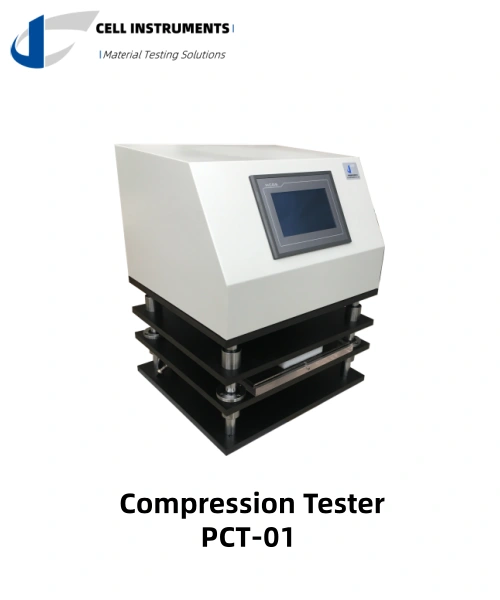
For accurate and reliable packaging compression tests, the Cell Instruments Package Compression Tester is an excellent choice. This state-of-the-art testing machine is specifically designed to evaluate the compressive strength of packaging materials, ensuring consistent and repeatable results.
Key Features of the Cell Instruments Package Compression Tester
- Precision Testing: The Package Compression Tester offers precise control over test conditions, ensuring accurate and reliable results. This is critical for assessing the compression strength of food outer packaging.
- Wide Range of Applications: The tester can be used to evaluate various types of packaging materials, including cardboard, plastic, and flexible packaging. This versatility makes it an essential tool for manufacturers in the packaging industry.
- User-Friendly Interface: The tester is easy to use, with a simple interface that allows operators to set up and run tests quickly. The system provides detailed results that help manufacturers make informed decisions about packaging design and material selection.
- Compliant with ISO 12048: The Cell Instruments Package Compression Tester complies with ISO 12048, ensuring that your tests are performed to the highest international standards.
Conclusion
The packaging compression test is a vital method for assessing the compression strength of food outer packaging. By evaluating how packaging materials withstand compressive forces, manufacturers can ensure that their packaging meets the required standards for durability and protection.
Using advanced testing equipment like the Cell Instruments Package Compression Tester ensures that the compression strength of packaging materials is accurately measured, helping manufacturers deliver high-quality packaging that protects food products during transport and storage.
 EN
EN  AR
AR  BG
BG  CS
CS  DA
DA  DE
DE  EL
EL  ES
ES  ET
ET  FI
FI  FR
FR  HU
HU  ID
ID  IT
IT  JA
JA  KO
KO  LT
LT  LV
LV  NB
NB  NL
NL  PL
PL  PT
PT  RO
RO  RU
RU  SK
SK  SL
SL  SV
SV  TR
TR  UK
UK