Packaging compression test is a critical quality assessment for Plastic Bottles, ensuring they can withstand mechanical stress during storage, transport, and handling. The ISO 12048 standard provides a reliable methodology to measure compression resistance and helps manufacturers optimize packaging for durability and safety. This article guides you through the purpose, process, and practical considerations of compression testing, with insights into real-world applications.
Packaging Compression Test and Its Importance
The packaging compression test measures the ability of a filled transport package to resist compressive forces. For Plastic Bottles, this is essential to prevent deformation, collapse, or leakage during stacking and shipping. A typical scenario involves multiple layers of bottles stacked on pallets; weak packaging can result in significant losses due to bottle distortion or breakage. This test ensures products arrive in their intended condition, meeting regulatory and commercial standards.
Compression testing is often performed alongside other quality checks, including drop tests, vibration tests, and environmental stress evaluations. These combined methods give a complete picture of a package’s durability and performance under real-world distribution conditions.
Test Principle and Methodology
The ISO 12048 principle involves placing the test package between two parallel platens of a compression tester. Two main approaches are used:
- Compression Test: Load is applied until the package fails, or a predetermined force or displacement is reached.
- Stacking Test: A specified load is applied for a defined time or until collapse occurs.
During testing, the package’s response is measured in terms of deformation, load resistance, and time to failure. Compression strength provides insight into both the material performance and the overall design integrity of the packaging.
Key steps include:
- Weighing and measuring the filled package accurately.
- Placing the package centrally on the lower platen, ensuring proper alignment.
- Applying the load gradually to prevent sudden spikes that could skew results.
- Recording deformation and load data throughout the test.
- Examining the package and contents for damage after load removal.
Using this method, manufacturers can determine whether a package design meets minimum strength requirements, predict stackability in storage, and ensure safety during transit.
Practical Applications of Compression Testing
Plastic Bottles undergo compression testing in various scenarios:
- Retail stacking: Ensures bottles can handle shelf and pallet stacking without damage.
- Transport safety: Validates resistance to forces experienced during shipping and handling.
- Material comparison: Compares new packaging materials or design modifications for improved strength.
- Distribution simulation: Tests packages under realistic conditions, such as partial loading or point pressure on corners.
Compression tests also help identify weak points in packaging, such as thin walls, poorly sealed caps, or insufficient support in multi-bottle trays.
Factors Affecting Compression Strength Results
Several factors influence the outcome of a packaging compression test:
- Bottle material and wall thickness: PET, HDPE, and glass have different stress tolerances.
- Filling volume and liquid properties: Liquids exert internal pressure, affecting compression resistance.
- Temperature and humidity: Environmental conditions can alter material flexibility.
- Stacking orientation: Top-to-bottom, edge-to-edge, and corner-to-corner testing provide a full profile of performance under various loading scenarios.
Accurate testing considers these variables, ensuring that results reflect real-world conditions.
Recommended Equipment: Cell Instruments Package Compression Tester PCT-01
For reliable and precise testing, the Cell Instruments Packge Compression Tester PCT-01 offers advanced capabilities:
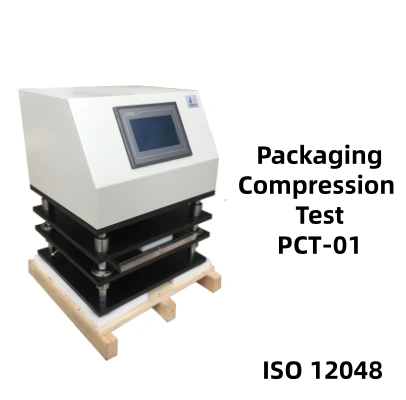
- Adjustable platen speed and load application for accurate simulation.
- Real-time load and displacement recording for detailed analysis.
- Ability to test different orientations: top-to-bottom, edge-to-edge, and corner-to-corner.
- Built-in safety features to protect both operator and test sample.
This instrument streamlines testing for manufacturers, allowing for rapid assessment of Plastic Bottles while maintaining compliance with ISO 12048 standards.
Conclusion
Conducting a packaging compression test is essential for quality control in Plastic Bottles manufacturing. By following ISO 12048 procedures, testing provides reliable data on compression strength, ensuring that bottles remain safe and intact during storage and transportation. With the right equipment, such as the PCT-01, manufacturers can efficiently evaluate packaging designs, optimize material selection, and maintain high standards of product protection.
 EN
EN  AR
AR  BG
BG  CS
CS  DA
DA  DE
DE  EL
EL  ES
ES  ET
ET  FI
FI  FR
FR  HU
HU  ID
ID  IT
IT  JA
JA  KO
KO  LT
LT  LV
LV  NB
NB  NL
NL  PL
PL  PT
PT  RO
RO  RU
RU  SK
SK  SL
SL  SV
SV  TR
TR  UK
UK